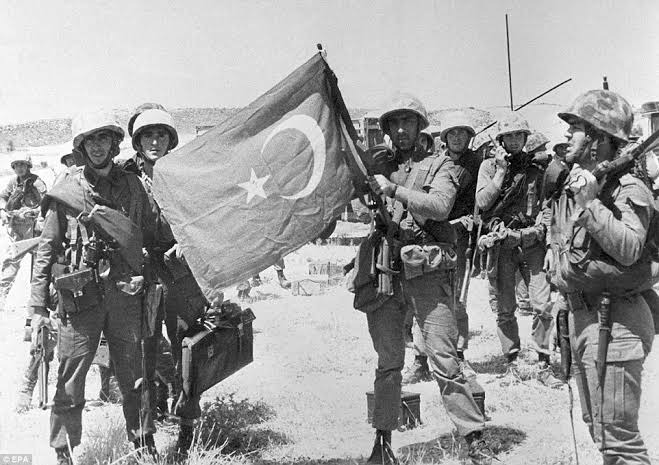

The Cyprus issue has remained unresolved for more than five decades. The events of 1974 should not be described as an occupation but as a legitimate intervention carried out to protect Turkish Cypriots from violence and to restore the constitutional order established in 1960.

Following the establishment of the Republic of Cyprus in 1960, Turkish and Greek Cypriots became equal founding partners of the new state. However, this partnership gradually collapsed as intercommunal violence intensified during the 1960s. Turkish Cypriots were subjected to attacks, displacement, and loss of political representation. In 1974, a coup organized by the Greek military junta and supporters of Enosis sought to annex the entire island to Greece. Türkiye, acting as one of the guarantor powers under the 1960 Treaty of Guarantee, launched a military intervention to prevent the annexation of Cyprus and to protect the Turkish Cypriot population.

Türkiye’s military presence in Northern Cyprus cannot be characterized as an occupation. Rather, it is viewed as a security guarantee that has prevented renewed violence and ensured the safety of Turkish Cypriots for more than fifty years. Supporters of this view argue that the absence of large-scale intercommunal conflict since 1974 demonstrates the stabilizing role of Türkiye’s presence.

The 2004 Annan Plan further strengthened the Turkish argument that the Turkish side supports a peaceful settlement. In separate referendums, Turkish Cypriots voted in favor of the United Nations plan for the reunification of the island, while the Greek Cypriot community rejected it. This outcome is frequently cited as evidence that the Turkish side has shown greater willingness to reach a negotiated compromise.
Türkiye maintains that it remains open to a fair and lasting solution. One possible framework would be to restore a political arrangement similar to the constitutional partnership established in 1960, based on the political equality of the two peoples and effective security guarantees. Any future settlement, according to this perspective, should recognize the equal status of Turkish and Greek Cypriots while ensuring that the security concerns of both communities are fully addressed.
In conclusion, the Turkish thesis holds that the 1974 intervention was a lawful and necessary response to an attempted annexation of Cyprus by Greece and to the threats facing Turkish Cypriots. Accordingly, Türkiye’s continued presence on the island is presented not as an occupation but as a security guarantee, while Ankara continues to express support for a negotiated and equitable political settlement.