
The world is going through a dangerous period, and there is a widespread belief that the days ahead will be even worse than these. Over the past three years, a great many countries have either entered into war or been affected by it in one way or another. Whilst many countries are providing external support for the Russia–Ukraine war, particularly in the north, Israel is annihilating any country, armed group, nation and even babies that stand in its way in its quest to become the sole dominant power in the region. Everyone is certain that Israel will not stop here. It will declare new enemies and attack them too.
Meanwhile, the US, having fallen under Israel’s sway, is not only squandering its resources but also losing its status as a superpower due to its short-sighted leaders. Its leaders are so incompetent that they are setting their sights on the territories of NATO allies, abducting the head of state of one country, assassinating the leader of another in collaboration with Israel, and treating its neighbour Canada as if it were the 51st state. Canada, which once saw great benefits in being a neighbour of the US, is now seeking ways to protect itself from the US.
So much so that the Canadian Prime Minister, Mark Carney, has come to Turkey—a country they were imposing an embargo on until just yesterday—to hold talks on purchasing drones, which they have refused to sell to Turkey. This is because the world is becoming more tense, countries are arming themselves, some are at war, and the rest fear that the conflict might spill over to them. For this reason, to ensure they do not remain vulnerable to their enemies, they are either rapidly producing weapons or purchasing them. They are in such a difficult situation that they are even knocking on the doors of countries they once looked down upon. This is because, following decades of peace, they anticipate that a new era of war is about to begin.Normally, countries such as Canada would rely on their allies. In particular, they would rely on American power and weaponry. But the Trump administration, far from being a source of support, is actually posing a threat to its allies. That is why everyone is fending for themselves. They are sourcing aircraft from one place, drones from another, and ships from yet other sources, trying to meet their armed forces’ needs as quickly as possible.
As most countries cannot be self-sufficient on their own, they are turning to cooperation with others. Setting aside the large, traditional alliances, smaller groupings are attracting attention.
For example, Turkey, Pakistan, Saudi Arabia and Egypt on one side, and the UK, Germany, France and Italy on the other, met in Istanbul. It is not often that these countries sit at the same table. But when it comes to security, they are able to come together and cooperate. Furthermore, the fact that they met in Istanbul rather than Washington is significant. This is because they no longer trust Washington. If they were to meet at the White House today, they would most likely be humiliated by Trump and sent back. That is why they are fending for themselves. The world is now demonstrating that it is multipolar, not through theoretical articles, but through the wars unfolding right before our eyes. America is powerful, but not a superpower. Moreover, rather than leading the Western bloc, it is targeting the Western bloc itself and threatening to withdraw from NATO. Countries, meanwhile, fear the outbreak of a new world war. From the weakest African nation to the most prosperous European country, every nation is spending money on weapons and forming new alliances within existing ones to ensure its own security.
Under current conditions, it is not the countries with the strongest economies that will survive, but those with the better weapons. This is why Israel is boldly challenging the countries in the region. Iran, meanwhile, is able to stand up to the US-Israel duo thanks to the missiles it has developed.
Although developed nations may drive technological progress, relatively less developed countries can catch up with the leaders through technology transfer, and this can even keep countries subject to sanctions, such as Iran, afloat. The world is undergoing rapid change, and those who lag behind are losing out. Armenia, which defeated Azerbaijan 30 years ago, was defeated by Azerbaijan in 44 days just five years ago. This is because Azerbaijan not only acquired advanced weaponry but also worked with allies such as Turkey and Israel.
Today, the situation is no different for the US and Russia. Whilst Russia entered the conflict without having invested in drones, Ukraine defended itself using inexpensive yet effective weapons such as drones and, with the support of its Western allies, was able to halt Russia’s advance. Russia has reached an impasse in Ukraine, whilst the US has done so in Iran.
Countries have recognised this and have turned to medium-sized states that are investing in modern weaponry. This is why Canada is now striving to acquire Turkish drones, which it had previously refused to supply. This is because Canada does not trust the United States. Furthermore, the US does not possess weapons that are as effective and cost-effective as these. The US still believes it can win the war with the major weapons of the 20th century. Perhaps they have now realised the truth, but it is doubtful whether they will be able to catch up with leading nations such as Turkey, Israel and China.
For this reason, even members of NATO—the world’s largest and most powerful military alliance—are seeking out new alliances. In the coming period, we will witness the formation of smaller-scale alliances in Europe and collaborations within the defence industry.
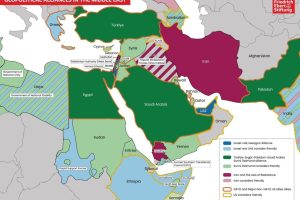
Alliances are already beginning to form in the Middle East. On the one hand, there are the countries rallying around Israel; on the other, the Sunni pacts led by Turkey and Pakistan are attracting attention.
Europe is producing weapons out of fear of war. As they do not trust the United States, they are trying to fend for themselves. They are particularly afraid of Russia.
The likelihood of war in Europe remains uncertain, but in the Middle East, the likelihood of Israel continuing the war is very high. Israel will not only continue to expand but will also likely attempt to attack Turkey, which it regards as a new threat.
A newer world order is replacing the existing one. Instead of East-West blocs, we will now see smaller blocs formed by specific countries. In other words, we will see a multitude of small, NATO-like alliances. ‘Small’ may well be the key word here. This is because small weapons, such as drones, are changing the concept of warfare and rendering large weapons ineffective. Even major powers are beginning to downsize. The will and conditions necessary to form larger alliances are lacking. Consequently, there will be regional, small alliances.
It is difficult to predict whether the old or the new order will be better for the world. But this transformation is not a matter of choice, but a necessity. Those who adapt will survive; those who do not will be crushed, and may even cease to exist.