
For the past 20 years, Türkiye has been working intensively to achieve self-sufficiency in armaments. State-supported companies like TUSAŞ, Aselsan, MKE, and Roketsan, along with private companies that later entered the defense industry, such as Baykar and Arca Defense, have reached a point where 80% of military needs are met through domestic production. In addition to the Turkish army, there is also an annual export of $11 billion to foreign customers, and this figure is increasing by approximately 20% each year.
We mentioned that 80% of the need is met by local firms. However, in today’s climate of a low-intensity global conflict, especially with Turkey being the next target of a war-addicted, ruthless country like Israel after Iran, the remaining 20% supplied from abroad is vitally important. We know that Israel (and Greece) are pressuring the US administration and other supplier countries for the unsupplied portion. Some Israeli experts even say that an attack on Turkey should not happen until 100% capability is achieved, otherwise it will be too late in a few years.
20% is truly significant. Because most of that percentage represents the engines of the most destructive, vital, and largest weapons in terms of volume. To summarize the current situation; in the context of missiles, after the successful tests of Siper 2, Turkey now has air defense missiles capable of shooting down warplanes from 150 kilometers away. However, missiles with this range are not yet in mass production. Siper 1 and Hisar-type systems are not yet in sufficient numbers in the inventory. While Turkish contractor firms are trying to increase production, the government is also trying to acquire air defense systems from abroad to close the gap. In this regard, negotiations are underway with France for the purchase of the Franco-Italian jointly produced SAMP/T missiles. It is said that France, which was previously hesitant about the sale, is now more receptive. The version that can also shoot down ballistic missiles would fill a major gap. The Minister of National Defense said that work is also being done on the purchase of Patriot missiles, but did not give many details. Even if the US approves the sale, the supply will take years because Turkey will receive it after other waiting customers.
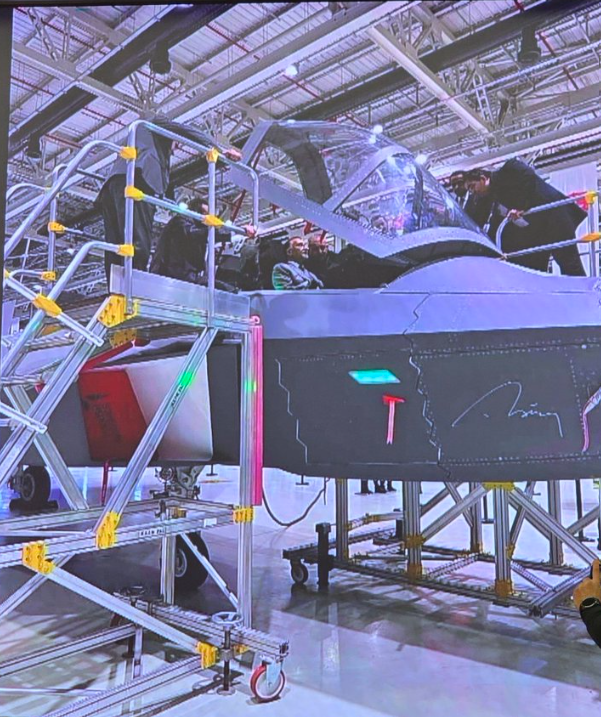
The most important component awaiting US approval these days is the F110 engines to be used in the first batch of the KAAN aircraft. Ten of these engines, also used in the F-16, were purchased for the KAAN prototypes. The main order is for 80 engines worth $700 million, and a response from Congress is awaited for the sale. On June 24th, the US State Department sent a letter to Congress stating that it would sell the engines to Turkey without congressional approval. Congress has 15 days to object, and that deadline is July 9th. For Congress to block the sale, a two-thirds majority in both the House of Representatives and the Senate is required. Such a majority is not expected to be achieved. Therefore, we can say that the obstacle to the sale of the engines is being removed these days. However, it is unknown when the engines will arrive. Since mass production hasn’t begun, there’s no need for engines at the moment, but considering that America might change its mind, it’s clear that the sooner they arrive, the better.
The Turkish government also wants to receive the F-35s it has already paid for. Israel and Greece are particularly opposed to the F-35 sale because while it will take years for the KAAN to enter the inventory, the Turkish F-35s, currently parked, could arrive within a few months. Therefore, there is intense pressure on the Trump administration from congressional members controlled by the Jewish, Greek, and Armenian lobbies. The excuse given for blocking the F-35 sale was Turkey’s purchase of S-400 missiles from Russia, and Türkiye was placed under CAATSA sanctions. Since these sanctions can normally only be lifted by Congress, President Trump needs to use some special powers granted under extraordinary circumstances. According to the New York Times, Trump may give Türkiye some good news at the NATO summit.
Frankly, we don’t know if there will be a need for F-35s, and if so, to what extent. If radars capable of detecting F-35s can be developed, not acquiring them might be a better option, as they are both expensive and, if the claim that they are remotely controlled is true, billions of dollars would have been wasted. On the other hand, there is information that the Eurofighter Typhoon jets that Turkey acquired from Qatar may arrive soon. It is known that Turkish pilots are continuing their training on familiarizing themselves with and using these aircraft. Having more than 200 F-16s in the inventory is another advantage.
In the context of the naval forces, we know that everything is going smoothly, with numerous corvettes and frigates in the inventory. We can also say that the gap in kamikaze drones has been closed.
In terms of surface-to-surface missiles, proficiency appears to have reached 100%. The Typhoon Block 3 missile, recently tested, achieved a great success by hitting a moving target at sea. The Typhoon Block 4 has not yet been tested, but there is a strong indication that its test will be successful.
There are expectations. Considering the proximity of countries hostile to Türkiye, it seems that the number of missiles will be more important than longer-range versions. On the other hand, we know that the Kızılelma unmanned combat aircraft has not yet entered the inventory. The lack of news regarding new deliveries of the Altay tank strengthens the possibility of a delay. The delay of the Altay is not a problem, but the Kızılelma needs to take on its duties as soon as possible.
In conclusion, the Turkish defense industry, with the pressure and support of the government, is trying its best to adapt to the risks in an environment where wars are ongoing on all fronts and Turkey is at high risk of being a target. Negligence in this matter will result in destruction. The constant exercises show that there is a state of alert, not negligence.
While these things are happening in Türkiye, hostile countries are not sitting idle. As soon as the war ended, Israel conducted air exercises with Greece and, in the words of the Israeli media, “sent a message to Türkiye in Türkiye’s backyard.” The Turkish air force had previously sent a message by conducting exercises with the Egyptian air force. It seems that conducting military exercises, signing military agreements, and selling weapons to Syria right now would be a good way to send a new message.
It appears that neither Türkiye’s enemies nor Türkiye itself are sleeping. However, it is necessary to remind everyone that the key word is not “not sleeping,” but “being awake.”